Birth, facts and some pieces of the puzzle of an unusual life, year by year to the present.
2004
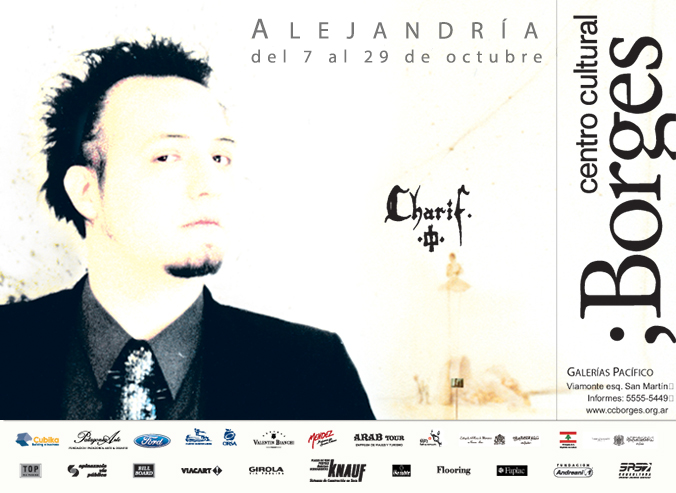
Poster of solo exhibition in the Centro Cultural Borges (2004)
Introduced by the mutual friend León Ferrari (1920-2013), Gustavo Charif starts a friendship with the legendary filmmaker Fernando Birri (1925-2017).
In March, Clarín (the largest newspaper from Argentina) publishes a short article by Gustavo Charif in the literary supplement in a section in which newspaper invites writers and personalities to recommend books and music. Charif recommends especially Georg Büchner, Robert Walser and Lu Xun (魯迅). To read the original text in Spanish, please click here.
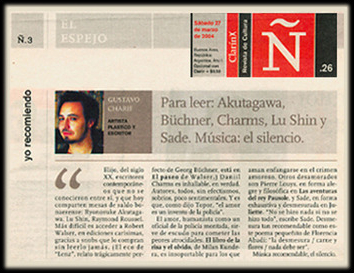
Charif’s article in Clarín newspaper (2004)
Around that time, he made the intervention on the Veil of Veronica (using the version by Zurbarán) erasing the Christ face and after, according his own words, “burned by a housemaid which tried to ironing the wrinkles, causing the miraculous appearence (depending of who is the observer) of a misterious bear or a mouse character“. This image would be used as icon or avatar through years in his website.
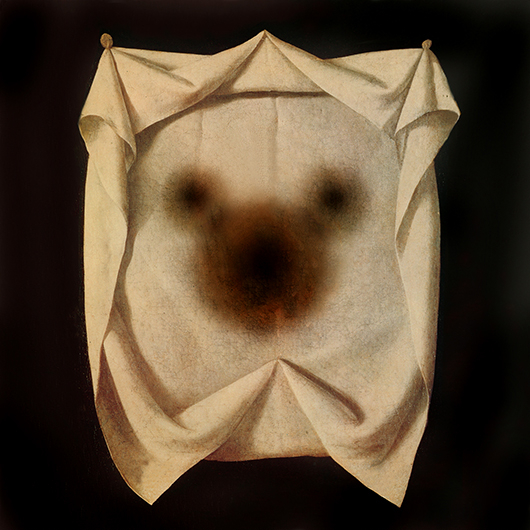
Aparición (Appearance, 2004) · canvas · 66 x 66 cm
Invited by the Centro Cultural Borges, Charif presents the gigantic solo exhibition Alexandria (in the same showroom where was, until that time, the solo exhibition of Salvador Dalí). The prestigious critic and curator Corinne Sacca-Abadi writes a special text for the catalogue. There, he shows for the first time Dos cartas, the artist’s book with texts of Fernando Arrabal and Milan Kundera, and presents the artist’s book Libro Alejandrino (Alexandrine Book), a box with fourteen digital photomontages which illustrates fourteen ancient Arabian texts. But the main part of the exhibition is occupied by 24 big paintings on canvas and other 7 in small sizes. Due to the success of the exhibition, the Centro Cultural Borges extends it for another month.
Please, click on thumbnails to enlarge


The journalist Martín Mazzini introduces to Gustavo Charif with David Byrne. But, to Charif, was a very disappointing meeting. Completely different was the experience to meet the Mexican writer Carlos Fuentes, who visited the exposition by chance and talked to Charif a couple of hours, who remember him as “a extremely kind, humble in his manners but over all keen and wise in his conversation”.
Shortly later Charif becomes part of collection Paletas Argentinas that includes the most celebrated Argentinean masters (Antonio Berni, Raúl Soldi and Benito Quinquela Martín, among others). He is the youngest on in this prestigious collection who commissioned him an artwork painted on one of his palettes.
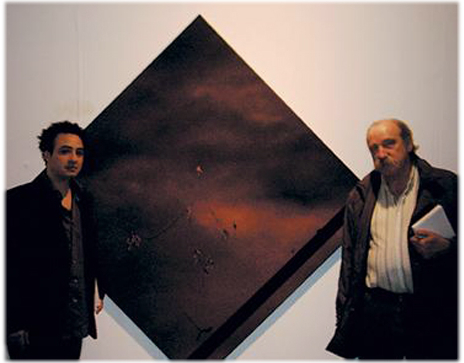
Writer Alberto Laiseca visiting Gustavo Charif in Alexandria (2004)
In June, the Museo Nacional de Bellas Artes (National Museum of Fine Arts) exhibits the Elía-Robirosa Collection (Luis Felipe Noé and Charif are two of the artists more represented in the exhibition as well in the catalogue-book).
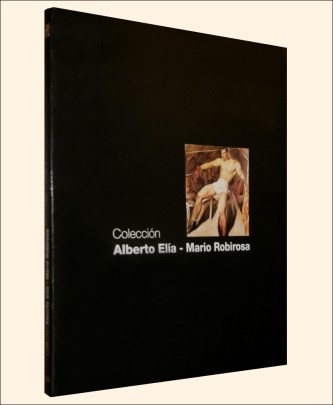
Catalogue-book of the Elía-Robirosa Collection
On December, Charif gives his two last (and long) interviews to journalist and writer Florencia Canale for Noticias magazine (one of the largest and popular magazines from Argentina) and to an alternative online magazine called Pistorius. To read the Noticias interview, please click here, and to read the Pistorius interview here (both posts available only in Spanish).
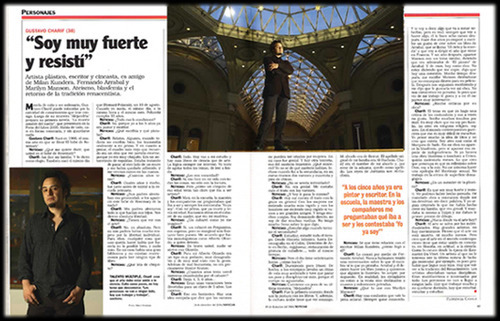
Charif in Noticias magazine (December 19, 2004)
Charif does not give interviews since 2004, with a few rare exceptions and just for intimate reasons (once in 2006 for Argentine television, and three times during 2013 for Malaysian and Chinese press).
The year was marked by numerous digital and new technologies experiments, as well as his secretly work as musician behind different names (out of Argentina). Starts a series of micro-collage, series which still continues.
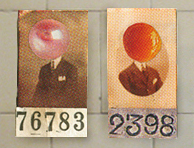
Archives of a Next Holocaust 2004 · micro-collage · 4,5 x 6 cm
Between 2004 and 2006 he collaborates as musician (playing the whole strings, brass and drums parts) and arranger in Secret, album debut of the indie pop singer, pianist and composer Sumaia O.
2005
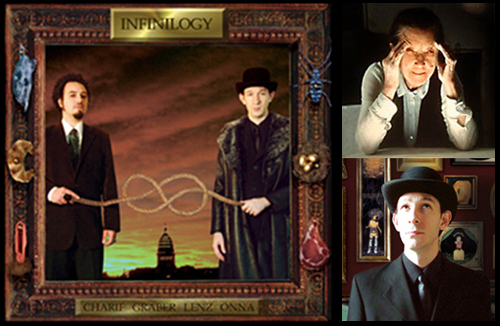
Founding of Infinilogy by Onna & Charif · Louise Bourgeois and Andrés Onna
With Agares Graber, Victorio Lenz and Andrés Onna, Gustavo Charif founds Infinilogy, a kind of aesthetic and philosophical movement or group, developed in a series of works, texts and (for a couple of years) in a curious website that was a parody of a sect and, at the same time, a joke on the avant-garde artistic movements. At the time, Andrés Onna visits Louise Bourgeois at her home in New York, who, very enthusiastically gives him a series of recommendations for the infinilogists.
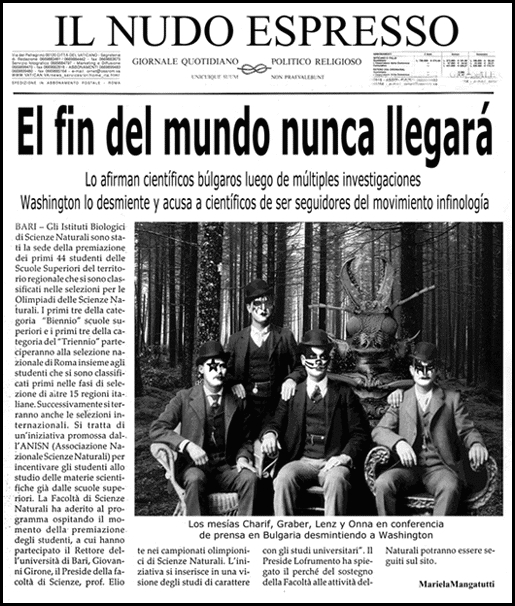
Il Nudo Espresso by Andrés Onna and Gustavo Charif (2005)
Charif is selected for the itinerant Bienal Paloma Alonso at the MACLA, Museum of Contemporary Art of La Plata (May and April), at the Palais de Glace (June) and at the Museo Municipal de Bellas Artes of Luján (August). The Bienal continues to shows at the Museums of Tandil, Olavarría and Bahía Blanca.
Television Channel Ciudad Abierta broadcasts the documentary La mirada circular, entirely dedicated to Charif (directed by Pablo Padula and produced by Las Huellas del Hombre), recorded a couple of years before. To see an extract from the documentary (in Spanish without subtitles), please click here.
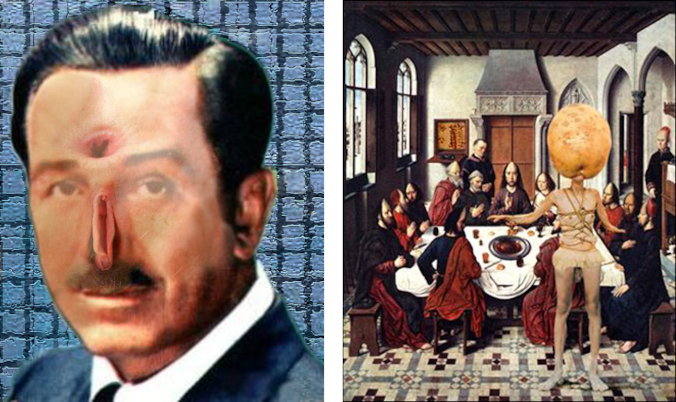
The Third Eye of Walt Disney (2005) and Communion of the Blood, the Potato and the Anorexia (2005),
two “infinilogist” works signed as Lenz and Charif respectively
On August 2, Daniel Maman Fine Art opens the exhibition Colectivo y Singular as a traveling through the greatest Argentinean masters (Roberto Aizenberg, Antonio Berni, Emilio Pettoruti, Prilidiano Pueyrredón, Guillermo Roux, Cesáreo Bernaldo de Quirós, Antonio Seguí, Raúl Soldi, Xul Solar, among others) that includes the only two young painters Guillermo Kuitca and Gustavo Charif.
In August 10 inaugurates Tras las huellas del ingenioso hidalgo, a collective exposition of graphic art about the Quixote of Cervantes, organized by the Pontificia Universidad Católica (Pontifical Catholic University of Argentina). Charif takes part with three works, invited by this institution.
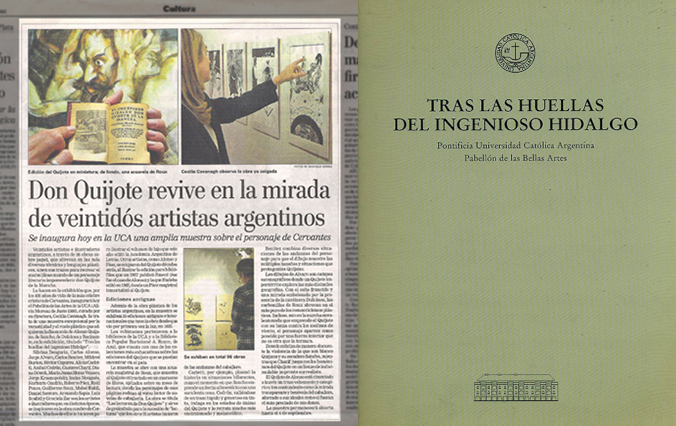
Article about the Quixote exhibition in La Nación newspaper, and cover of the catalogue
Charif is invited by the Argentinian magazine Ramona to make an intervention on a cover, in a collective exhibition. Because the magazine represented pretty well that what Charif sees as “the great contemporary art swindle”, he sends Pequeño ataúd (Little Coffin), a parody of the magazine inside a funeral box, where he changes, for example, the motto “revista de artes visuales” (“visual arts magazine”) by “revista de palabrería sin visión” (“magazine of wordiness without vision”).
Invited by the Fundación Torres Agüero-Rozanès (together with some of most important artists from Argentina, like Rogelio Polesello, Marta Minujín and Clorindo Testa, among others) to take part of the exhibition Caballos en Libertad (Horses in Freedom), Charif intervenes a real-size horse (in aid of the Argentine Association of Activities Equestrians for Handicapped and for the financing of scholarships in France for young artists that gives the Foundation).
In Spanish the word “caballo” means “male horse”, but the female horse is called “yegua”. Charif changed the topic of the exhibition and titled his work Yegua en libertad (or female horse in freedom). That was the only female horse between the many horses.
Please, click on thumbnails to enlarge


Charif is the first artist to be invited with honours to the first Bienal Fin del Mundo (Biennial of the End of the World, Ushuaia) organized by the Fundación Patagonia Arte y Desafío. But after a trip to Ushuaia with the president of the Foundation, Charif decides reject the invitation in disagreed with the organization and the lack of transparency.
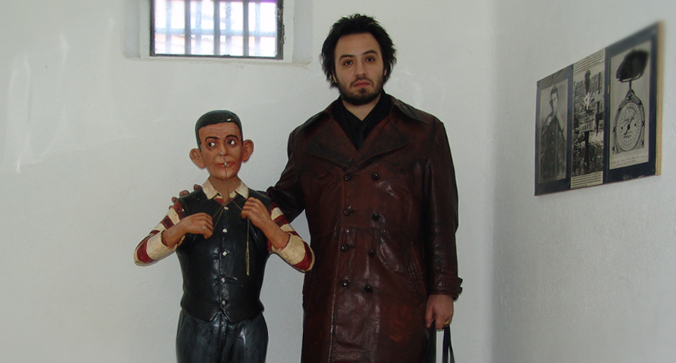
Charif in the cell of serial killer Cayetano Santos Godino (a.k.a. “Petiso Orejudo”) in the Ushuaia former prison
(August 15, 2006)
Charif plans an installation in Italy, and requests the artistic and creative collaboration of 12 friends (Fernando Arrabal and Fernando Birri, among others). Finally the project was cancelled for the complexity of his realization, but probably will be done some day.
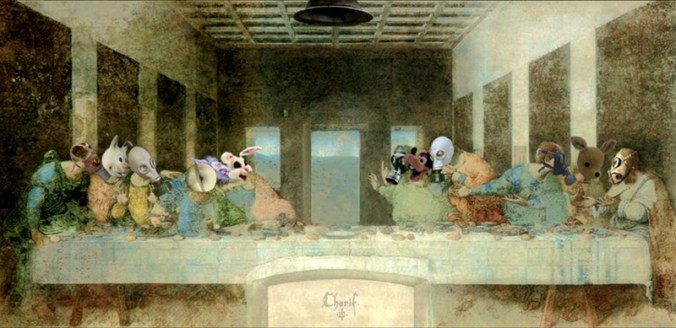
Power of the CinemaScope (Gustavo Charif, 2005)
Here a letter (dated in Rome, August 31) from Fernando Birri (in his beautiful and peculiar style) to Charif when the project started:
ChériCharif,
es siempre una gran alegría escucharte (aunque esta vez no sea por telefunken sino a través de email). Y duplicada por la visión/versión de los “Doce Comedores de Sales sin Maíz”. Obviamente, correspondo a tu declaración de amor/humor con un categórico, temerario e irresponsable SÍ (con acento y mayúscula). Estoy de veras muy a gusto en vuestra davinciana compañía y se agradece el recuerdo.
Te quiere,
Fer.
ChériCharif: It’s always a great joy hear you (although this time was not by phone but through e-mail). And a joy duplicated by your vision/version of the “12 Eaters of Salts without Corn”. Obviously I reciprocate to your declaration of love/humour with a categoric, reckless and irresponsible YES (with accent and capital letters). I am truly very at ease in your DaVincian company and I am grateful for remember me.
Loves you,
Fer.
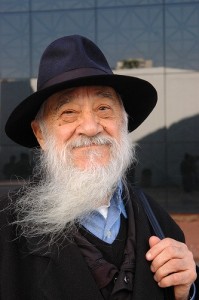
Fernando Birri in Rome
The Elía-Robirosa collection, released in June 2004 at the Museo Nacional de Bellas Artes (National Museum of Fine Arts), is shown in the Sala Emilio Pettoruti del Teatro Argentino (Great Hall Emilio Pettoruti of the Argentine Theatre, La Plata, Buenos Aires) and in the Museo Provincial de Bellas Artes Emilio Caraffa (Provincial Museum of Córdoba, Argentina).
2006
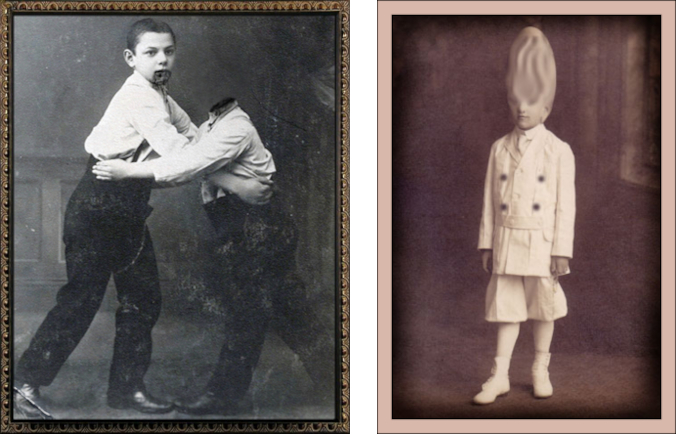
Child Cannibal Dance (2006) and Cookie Kid Communion -circa 1914- (2006)
Charif creates various fictional characters, most of them musicians with different MySpace accounts, each one with a personal biography, pictures, connections and tunes. Two of them are Chico Trompo (an eccentric jazz pianist who “died on 1945”) and Tita Puch (a parody of Marilyn Manson but in Argentinian style, creating the name with a combination of actress Tita Merello and the serial killer Robledo Puch… of course Tita Puch ends being the shabby version of a real band).
Please, click on thumbnails to enlarge


You can listen to Charif playing piano on the Trompo’s style, in his short experimental film Intolerance (or Best places in the world are places where human left no traces).
In May, as an exception, Charif gives his last TV interview for the Argentinian media, in Canal (à) channel. To see the full interview (original Spanish without subtitles), please click here.
On June 28th, the Pontificia Universidad Católica (Pontifical Catholic University of Argentina) inaugurates a collective exhibition in tribute for Jorge Luis Borges, where Charif takes part with five works (one of them in collaboration with Andrés Onna), invited by the institution. The exhibition includes works of important artists, among them the painter Norah Borges (sister of the celebrated writer), the photojournalist Eduardo Comesaña, the Argentine-Uruguayan caricaturist Hermenegildo Sábat and the multidisciplinary artist Libero Badii.
Please, click on thumbnails to enlarge


In July is released Secret, the solo album by Sumaia O in which Charif (behind the name of “Victorio Lenz”) collaborates as musician in arrangements, keyboards (bass, percussion and brass section) and guitars.
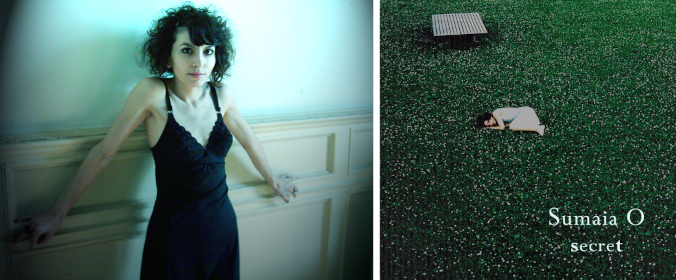
Sumaia O (photo by Gustavo Charif), and album cover Secret (photo by Lucila Bodelón)
In Paris, Fernando Arrabal for the Collège de ‘Pataphysique commissioned to Andrés Onna a big painting representing a meeting with Sainte Lis (Luce Moreau-Arrabal, canonized by Charif at the doors of Notre-Dame de Paris in December 15th 2002 at 12:15 hours), Thieri Foulc (Provéditeur du Collège de ‘Pataphysique) the 16 Satrapes from the College (Arrabal, Umberto Eco, Dario Fo, Jean Baudrillard, René Clair, Jean Dubuffet, Marcel Duchamp, Max Ernst, Eugène Ionesco, Alfred Jarry, Michel Leiris, Joan Miró, Jacques Prévert, Raymond Queneau, Man Ray, Boris Vian), and the infinilogists Andrés Onna and Gustavo Charif.
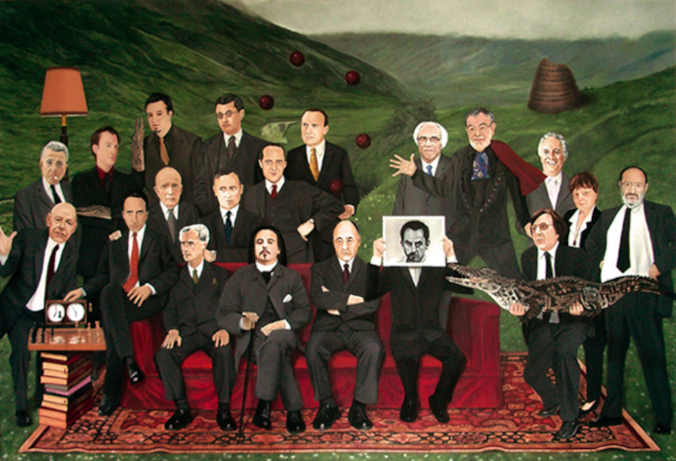
Au rendez-vous du corps des Satrapes (2006) by Onna (on croquis by Arrabal) · oil on canvas · 205 x 300 cm
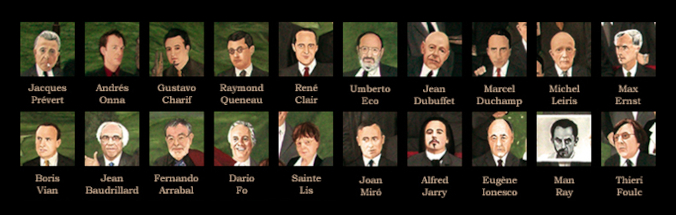
Au rendez-vous du corps des Satrapes (references)
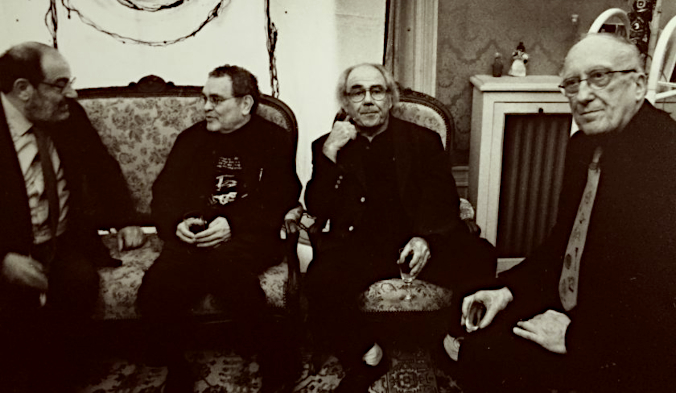
Umberto Eco, Fernando Arrabal, Jean Baudrillard and Dario Fo (Arrabal’s house, April 21, 2001)
In November 10, Charif plays guitars behind the name of Victorio Lenz as guest musician of Sumaia O in the Festival Código País (Buenos Aires). This is the last recognisable performance of Charif as musician in a live show. From then, Charif collaborates in different projects as a “hidden musician” under different names and always out of Argentina.
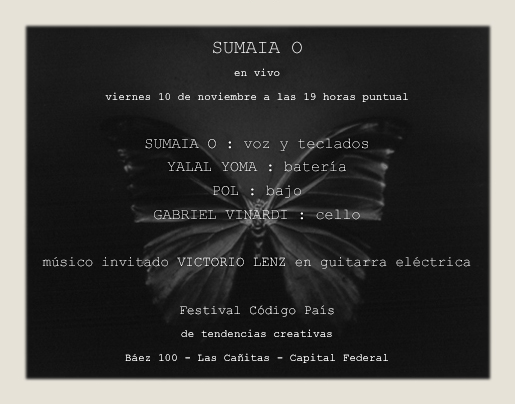
Flyer of the concert (photo: Sumaia O, 2006)
He starts a new direction with digital experimentation, but the most part of his time is occupies working in his novels, essais and short stories. From now, he’s walking away from public life more and more. Ending the year, Gustavo Charif works in a few paintings with a style that combines all his different periods. One of these canvas is Tragedia Celeste (Celestial Tragedy), started three years before.
Please, click on thumbnails to enlarge

![[Detail of] Tragedia Celeste (Celestial Tragedy, 2003-2006) · Oil, fire and mixed media on canvas · 100 x 200 cm](https://i0.wp.com/gustavocharif.com/wp-content/uploads/2020/08/chron-0095-b.jpg?w=108&h=108&crop=1&ssl=1)
![[Detail of] Tragedia Celeste (Celestial Tragedy, 2003-2006) · Oil, fire and mixed media on canvas · 100 x 200 cm](https://i0.wp.com/gustavocharif.com/wp-content/uploads/2020/08/chron-0095-c.jpg?w=108&h=108&crop=1&ssl=1)
![[Detail of] Tragedia Celeste (Celestial Tragedy, 2003-2006) · Oil, fire and mixed media on canvas · 100 x 200 cm](https://i0.wp.com/gustavocharif.com/wp-content/uploads/2020/08/chron-0095-d.jpg?w=108&h=108&crop=1&ssl=1)
![[Detail of] Tragedia Celeste (Celestial Tragedy, 2003-2006) · Oil, fire and mixed media on canvas · 100 x 200 cm](https://i0.wp.com/gustavocharif.com/wp-content/uploads/2020/08/chron-0095-e.jpg?w=108&h=108&crop=1&ssl=1)

Gustavo Charif is included in the biggest dictionary of visual arts in Argentina: the ABC de las artes visuales en la Argentina, made by a group of investigators directed by the art critic Osvaldo Svanascini (1928-2015).
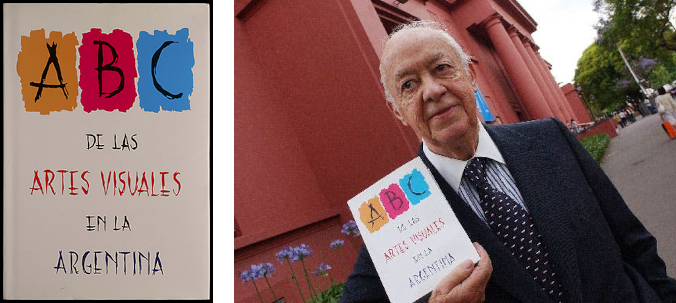
Dictionary’s cover and Osvaldo Svanascini with a copy at the National Museum of Buenos Aires doors
2007
Under the pseudonym of Victorio Lenz, Gustavo Charif records the album GesamtKunstWerk! playing all the instruments. List of songs: Sumaia dans le fôret de femmes, Burn All Flags, Descascaramiento de la secta de la cebolla, Wenn ich der Führer wär, No Distraction, San Peppe Pellegrino, África blanca, Let’s be honest: psychology must die, Tango puto, Bobby Fischer Random, Teen Lesbian Orgy: Topologic Chain, Pichichus al espiedo and the monkey of Thelonious, En el país de los ciegos el tuerto es rey, The Cannibal Kiss of the Proletarians, Serenata maléfica, Ninfa ninfita nívea, Communion of the Blood, the Potato and the Anorexia, Polifilia, Anche me piace molto la Cina, Chanson Poderosa, El triunfo de los conejos voluntariosos, Happy Ende.
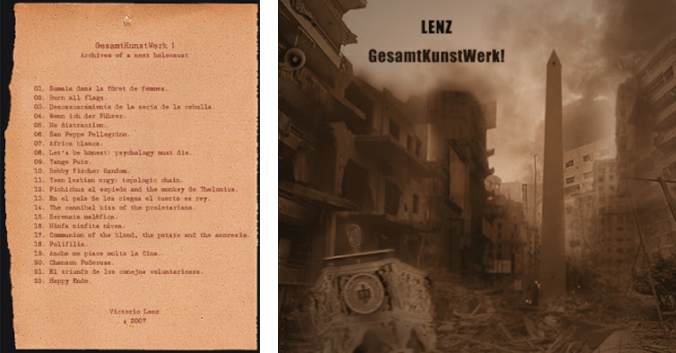
List of Lenz’s songs in a recording studio wall and album cover of GesamtKunstWerk! (2007)
The Elía-Robirosa collection, released in June 2004 at the Museo Nacional de Bellas Artes (National Museum of Fine Arts), is shown in the Oscar Niemeyer Museum (MON), one of the bigger and more prestigious museums of Latin America.
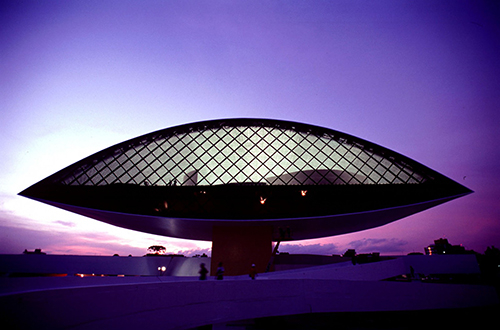
The Oscar Niemeyer Museum (Curitiba, Brazil)
Before ending the year, Gustavo Charif founded Kino Red (uncorporation) with the system engineer, mead maker and associate Martín Ramírez.

Kino Red logo · © Ramírez & Charif 2007
2008-2009


Gustavo Charif makes experiments with digital edition in some short films and videos (Final Feliz -in collaboration with Martín Ramírez-, La Argentina and No Distraction), in some cases with music by his alter ego Victorio Lenz and, sometimes, using public domain footages.
Meanwhile, the first feature film by Gustavo Charif, The Reason, which were shoted in 2007, faces the stage of post-production.
In 2008 Charif works mostly in a series of big oil paintings inspired by the tragic times in Nanking during the Japanese invasion and in some images from the European War (series that will be unfinished), and recording music as Lenz for an unfinished album titled Humanity.
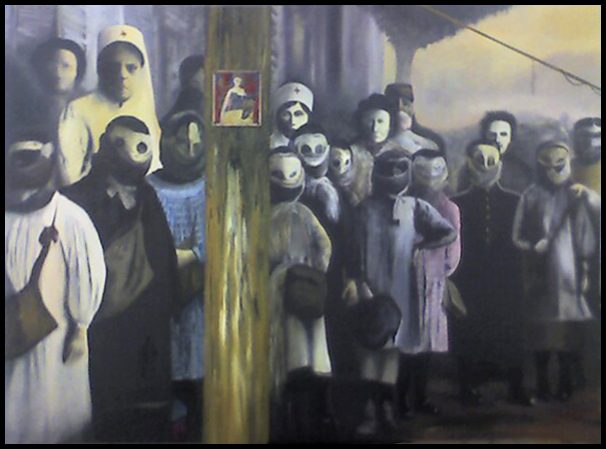
Children Factory (2008) · oil on canvas · 140 x 160 cm
In 2009 Charif works in a series of micro-collages and micro-paintings and, at the same time, in a big triptych, Study for an Autobiography, today in a private collection of United States.
Please, click on thumbnails to enlarge


GP Media (Argentine company associated with the BBC Worldwide) commission to Gustavo Charif a series of short videos for the successful talk-show Un Mundo Perfecto (A Perfect World, hosted by Roberto Pettinato).

Comando DyL flag designed by Gustavo Charif in 2009
In collaboration with producer Gastón Portal, Charif creates a fictional activist group called Comando DyL (a “Command for the Destruction and posterior Liberation of the TV”). This “command”, a kind of parody of left clandestine group, produces a series of “terrorist messages” for “destroy the television”. Those videos (directed by Gustavo Charif under the pseudonym of Mao Chow Fan) appear in a random way during the talk-show, interrupting with satiric reports about media.
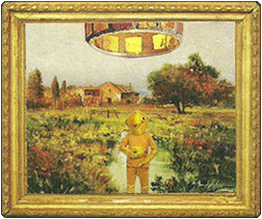
Happy Landing (2009) · micro-collage, oil pastel, ink, pencil · 43 x 52 mm
2010-2011
Je sais, je suis comme un dernier Bérenger de l’Argentine. Au dernier acte, je n’accepte pas la «rhinocérite». -Gustavo Charif, November 30th, 2010.-
I know, I’m like a kind of last Bérenger in Argentina. Even in the last act, I do not accept the “rhinoceritis”.
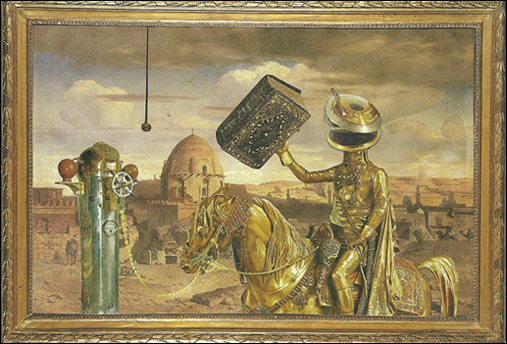
Degoldenribonucleic I of Wasteland, the Great Conqueror (2010)
micro-collage, inks, pencil and oil pastel · 11 x 16,5 cm
On September is the release in France of the documentary about Fernando Arrabal titled L’art d’être Arrabal (2010) and directed by Pierre de Potestad and Bernard Léonard, which includes footage with Charif in Paris.
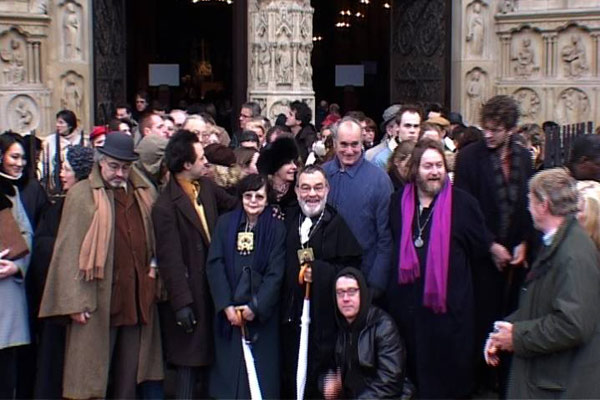
Film still of L’art d’être Arrabal (2010) where we can see to Aoi, Jean-Marc Debenedetti, Charif, Luce Moreau-Arrabal (Sainte Lis), Laurence Imbert, Fernando Arrabal (San Fando), Marc Brenner, Michael Thalheimer (sitting) and Grégoire Lacroix (backwards), among others
On October 6, 2010, is released his first feature film, The Reason (IMDb data sheet here), which includes an unreleased song by Moby, who generously granted the rights for use in the film. The film is awarded for “the excellence technique” during the Festival de Cine Inusual, and invited out-of-competition to the Mar del Plata International Film Festival in 2011. To see the full data sheet about The Reason please click here.
As usual, Charif uses most part of the time working on his literature, mostly in some novels started by him many years ago and in a book with 33 narratives. But he believes these books will be ready in some three or four years more, thus he publishes on Internet only an Autobiography of 24 words.
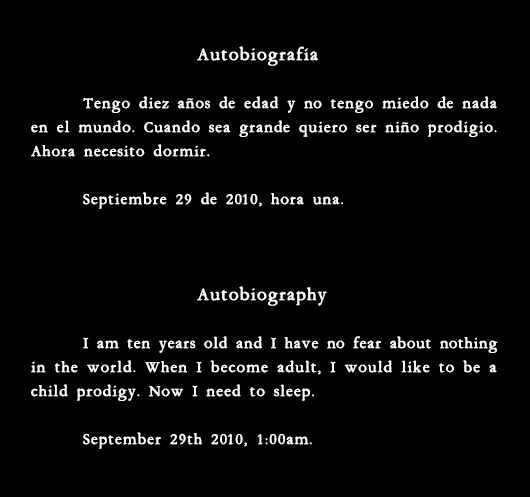
Autobiografía (2010)
Constantly experimenting, Charif creates a new technique that he calls analogital, which consist in a way to integrate analog photography and digital techniques with collage, inks, oil pastel and other classic procedures. To know and see more about the analogital technique, please go to the FINE ARTS section. The following is just a brief selection.
Please, click on thumbnails to enlarge


 Charif · 沙里夫 ·